
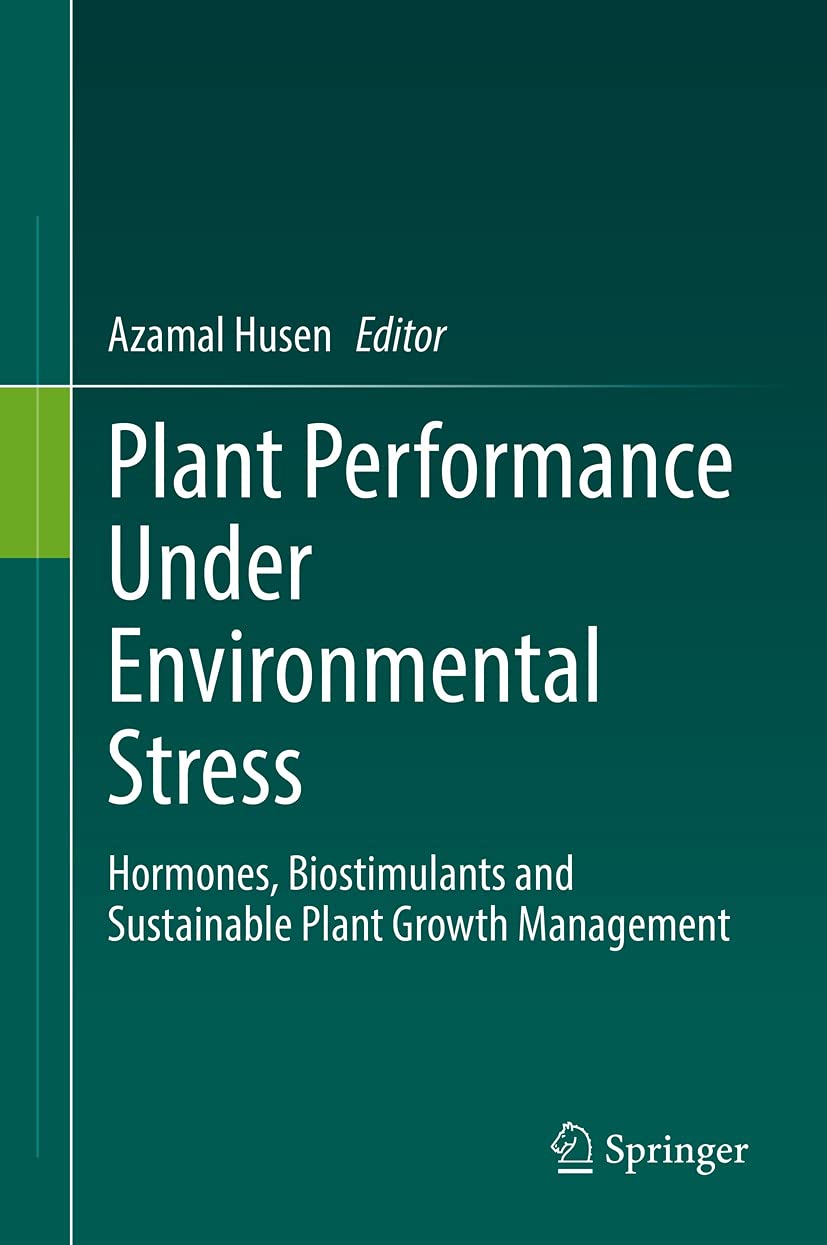
Plant Performance Under Environmental Stress: Hormones, Biostimulants and Sustainable Plant Growth Management
Product details
| Management number | 232015023 | Release Date | 2026/06/18 | List Price | $60.00 | Model Number | 232015023 | ||
|---|---|---|---|---|---|---|---|---|---|
| Category | |||||||||
Global climate change is bound to create a number of abiotic and biotic stresses in the environment, which would affect the overall growth and productivity of plants. Like other living beings, plants have the ability to protect themselves by evolving various mechanisms against stresses, despite being sessile in nature. They manage to withstand extremes of temperature, drought, flooding, salinity, heavy metals, atmospheric pollution, toxic chemicals and a variety of living organisms, especially viruses, bacteria, fungi, nematodes, insects and arachnids and weeds. Incidence of abiotic stresses may alter the plant-pest interactions by enhancing susceptibility of plants to pathogenic organisms. These interactions often change plant response to abiotic stresses. Plant growth regulators modulate plant responses to biotic and abiotic stresses, and regulate their growth and developmental cascades. A number of physiological and molecular processes that act together in a complexregulatory network, further manage these responses. Crosstalk between autophagy and hormones also occurs to develop tolerance in plants towards multiple abiotic stresses. Similarly, biostimulants, in combination with correct agronomic practices, have shown beneficial effects on plant metabolism due to the hormonal activity that stimulates different metabolic pathways. At the same time, they reduce the use of agrochemicals and impart tolerance to biotic and abiotic stress. Further, the use of bio- and nano-fertilizers seem to hold promise to improve the nutrient use efficiency and hence the plant yield under stressful environments. It has also been shown that the seed priming agents impart stress tolerance. Additionally, tolerance or resistance to stress may also be induced by using specific chemical compounds such as polyamines, proline, glycine betaine, hydrogen sulfide, silicon, β-aminobutyric acid, γ-aminobutyric acid and so on.This book discusses the advances in plant performance under stressful conditions. It should be very useful to graduate students, researchers, and scientists in the fields of botanical science, crop science, agriculture, horticulture, ecological and environmental science. Read more
| ASIN | B09DF9YBHV |
|---|---|
| XRay | Not Enabled |
| ISBN13 | 978-3030785215 |
| Language | English |
| File size | 28.5 MB |
| Page Flip | Enabled |
| Publisher | Springer |
| Word Wise | Not Enabled |
| Print length | 1072 pages |
| Accessibility | Learn more |
| Publication date | August 23, 2021 |
| Enhanced typesetting | Enabled |
Bestseller ranking
Cutting Tools
Customers who viewed this product also viewed
Developmental Biology



Correction of product information
If you notice any omissions or errors in the product information on this page, please use the correction request form below.
Correction Request Form